Engineering-aligned planning
Engineering review integrates design load criteria, geotechnical documentation, and subsurface data to define required pier size and installation depth for each project condition.
Geotechnical & Structural Foundation Support
We provide helical pier engineering support and installation services for geotechnical firms, structural engineers, contractors, and developers across Utah, Colorado, Wyoming, Idaho, Montana, Oregon, Washington, and Nevada, aligning load requirements, subsurface data, installation depth, and torque criteria through documented project closeout.
Services & Capabilities
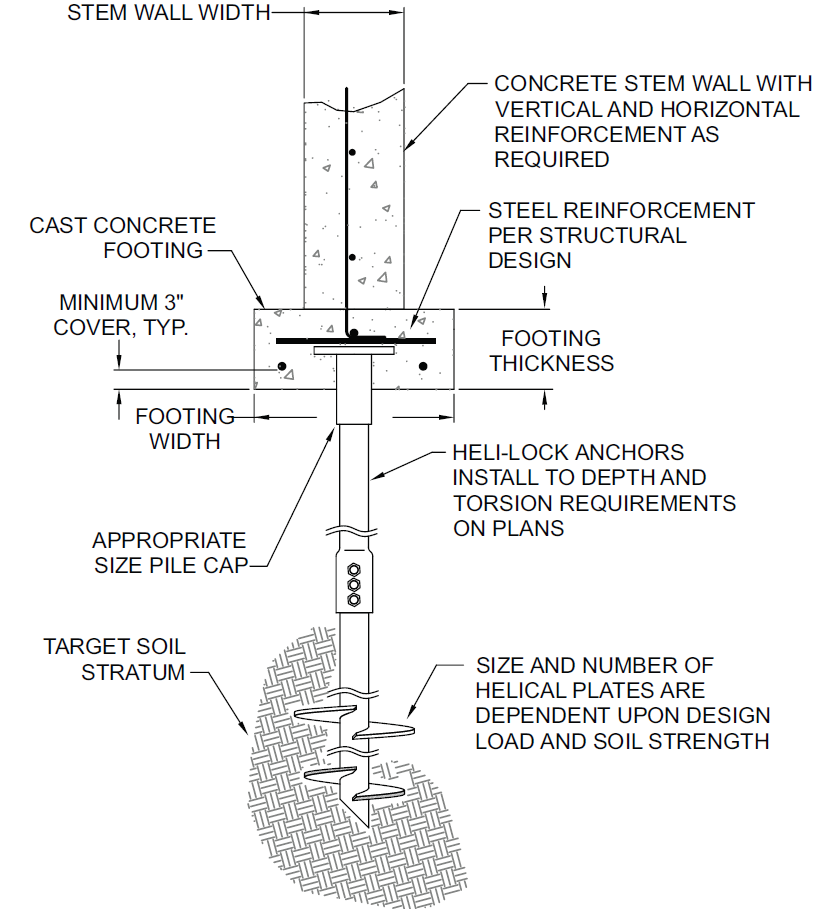
Our team evaluates design load criteria alongside geotechnical reports and subsurface findings to develop project-specific helical pier recommendations, including modeled diameter and depth parameters aligned with required foundation performance.
Engineering review integrates design load criteria, geotechnical documentation, and subsurface data to define required pier size and installation depth for each project condition.
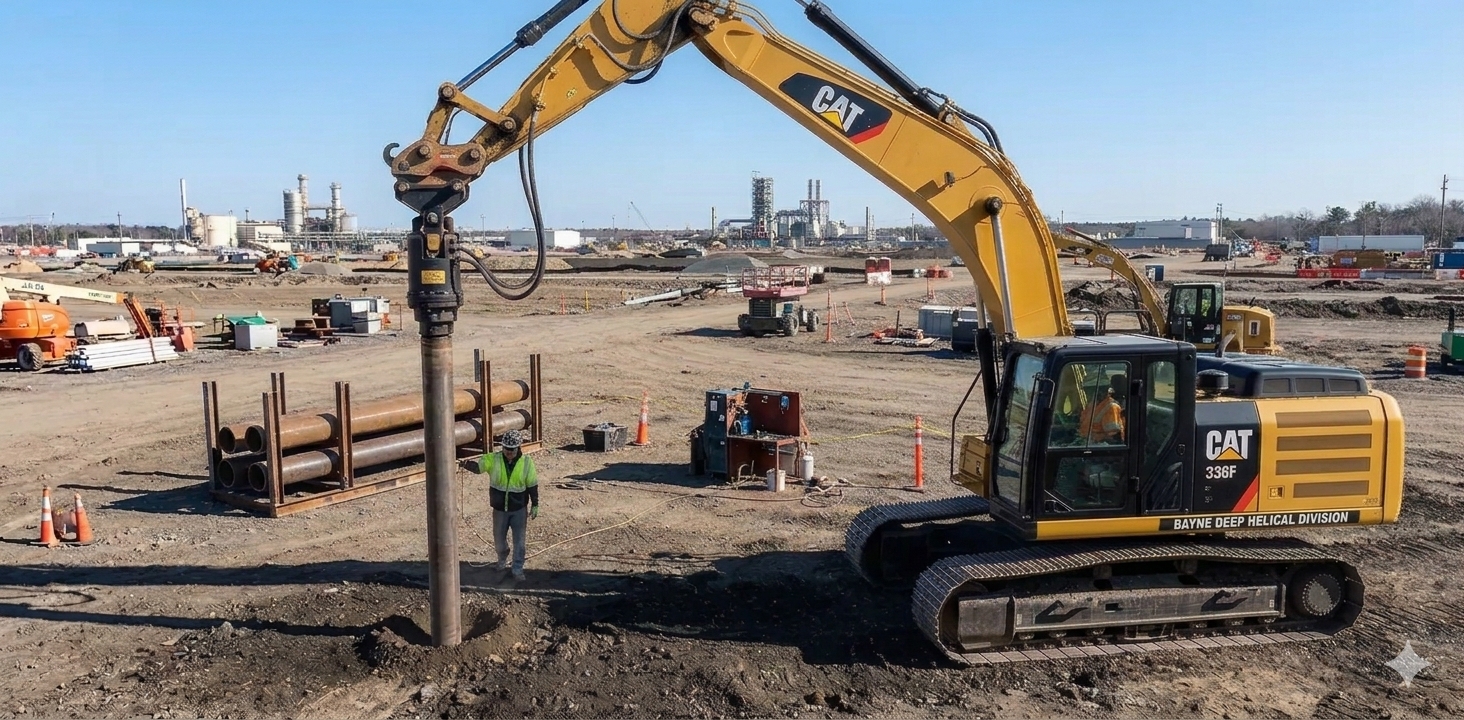
Field crews install to specified depth and torque criteria using advanced torque monitoring technology, with each installation recorded and graphed against project requirements and retained for technical verification and closeout documentation.
We coordinate with engineers, contractors, and ownership teams to maintain alignment between design intent, field sequencing, and installation reporting throughout execution.
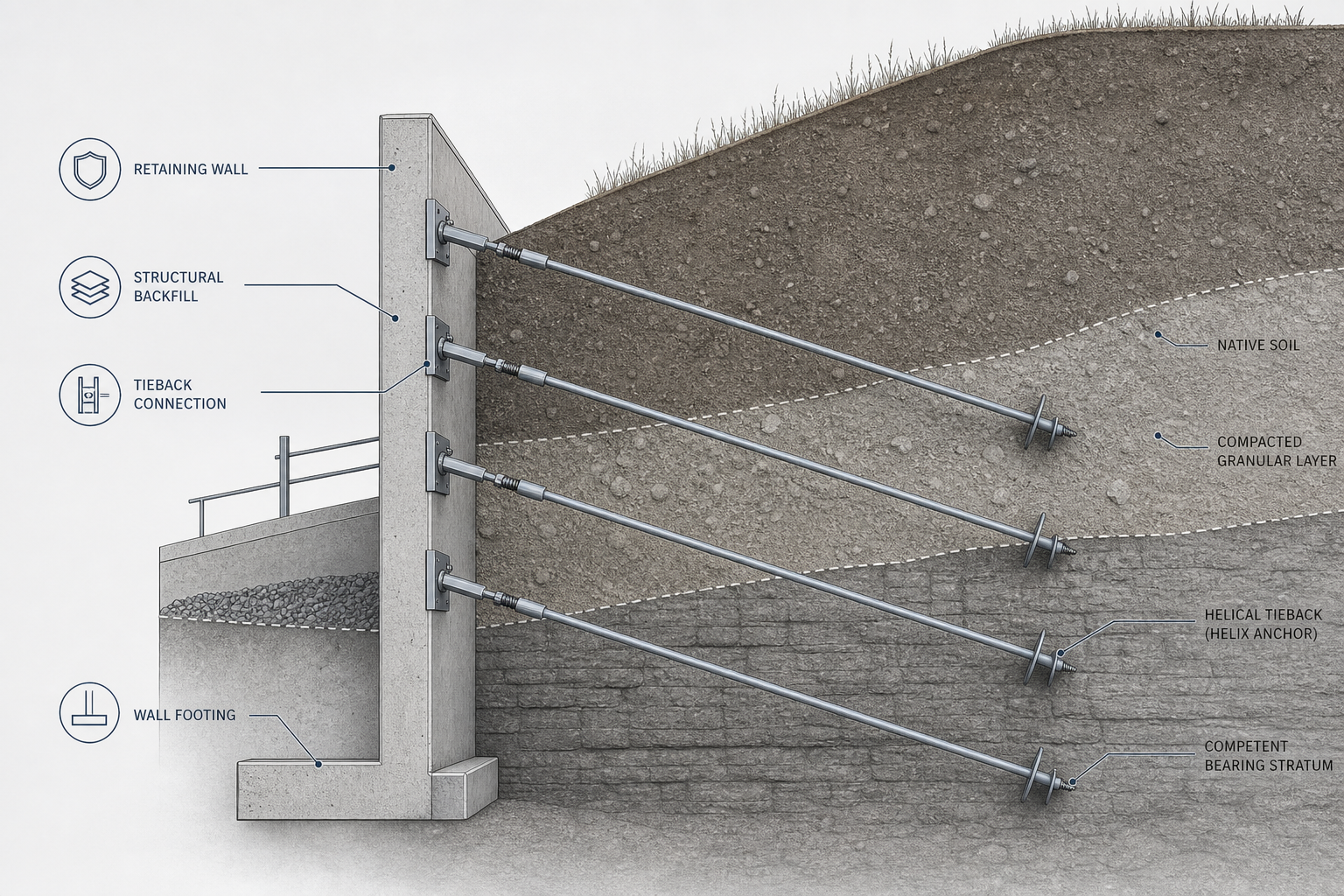
Our installation program includes 1.5 inch to 3 inch helical piers for lighter-load demands, tieback applications, and comparable support conditions, as well as 4 inch, 6 inch, 8 inch, 10 inch, and 12 inch piers for high-capacity systems and large-load facility applications.
Applications & process
Confirm fit for the site and loading conditions, then advance through a defined four-step workflow from technical review to verified installation.
New construction support
Deep foundation load transfer for additions, equipment foundations, and structures requiring dependable bearing support.
Remedial stabilization
Underpinning and settlement mitigation for distressed foundations, including corrective support programs.
Site-constrained installation
Deployment in low-access or restricted-clearance environments where conventional deep foundation systems are impractical.
Variable soil profiles
Applications requiring installation verification relative to geotechnical profiles and specified design load criteria.
Initial review
Establish project objectives, governing load criteria, and available geotechnical information to define preliminary engineering direction.
Applicability screening
Assess helical pier suitability against interpreted subsurface conditions, access constraints, and required service and factored loads.
Design-team coordination
Coordinate proposed pier diameter, embedment depth, and installation criteria with structural documents, sequencing, and project controls prior to mobilization.
Installation & verification
Install to specified depth and torque thresholds using advanced monitoring instrumentation, with recorded field data retained for technical verification and closeout documentation.
Concise proposal statements outlining how engineering criteria and field installation controls remain aligned from planning through technical closeout.
Collaborative Engineering Support
Engineering personnel evaluate design load criteria, geotechnical findings, and site data to produce project-specific helical pier recommendations, including sealed design support where required.
Coordinated Execution
Design professionals and installation crews execute to a shared project plan, maintaining alignment on sequencing, access, equipment, and verification requirements through each phase.
Responsive Communication
Stakeholders receive timely, technically grounded updates on field observations, subsurface conditions, and required adjustments that affect scope, sequencing, or schedule.
Torque-Verified Records
Installations are executed with advanced torque monitoring, and each pier is recorded and graphed against specified depth and torque criteria, with documentation retained for technical verification and project closeout.
Client Feedback
Brief reference statements from engineering and construction partners on coordination, technical execution, and field delivery.
“They coordinated seamlessly with our structural engineering team and the project geotechnical firm, and delivered stamped engineered helical pier designs aligned with project requirements.”
“We needed a foundation support partner with both technical understanding and reliable field execution; their team delivered consistently on both.”
“Project coordination was disciplined and responsive, and installation activities were completed efficiently with clear communication to our site team.”
Technical FAQ
Focused technical responses to help engineering and construction teams align scope, constraints, and next-step coordination.
Suitability is evaluated against required loads, subsurface profile, access limitations, and performance criteria. We review available geotechnical and structural data to confirm feasibility and establish a preliminary installation basis.
Coordination is structured around design intent, loading assumptions, acceptance criteria, and documentation protocols. Field observations and torque data are delivered in a format suitable for design-team review and verification.
Preconstruction alignment should occur early so access, sequencing, and verification requirements are integrated before mobilization. Installation is typically scheduled after site layout and access are established, and before dependent structural activities.
Headroom limits, tight setbacks, existing utilities, subsurface obstructions, and access logistics can affect tooling selection, pier configuration, and production rates. Early definition of constraints reduces field risk and schedule disruption.
Installation capability includes 1.5-inch to 3-inch helical piers for lighter-load and tieback applications, and 4-inch, 6-inch, 8-inch, 10-inch, and 12-inch systems for high-capacity and large-load foundation support.
Provide project location, structure type, design loads, available geotechnical information, known constraints, and target schedule. Preliminary plans are sufficient for an initial technical review and a practical response strategy.
Ready to discuss your conditions and load requirements? Continue to the project inquiry section.
Share core technical and scheduling information so we can prepare an informed, qualified response for your project team.